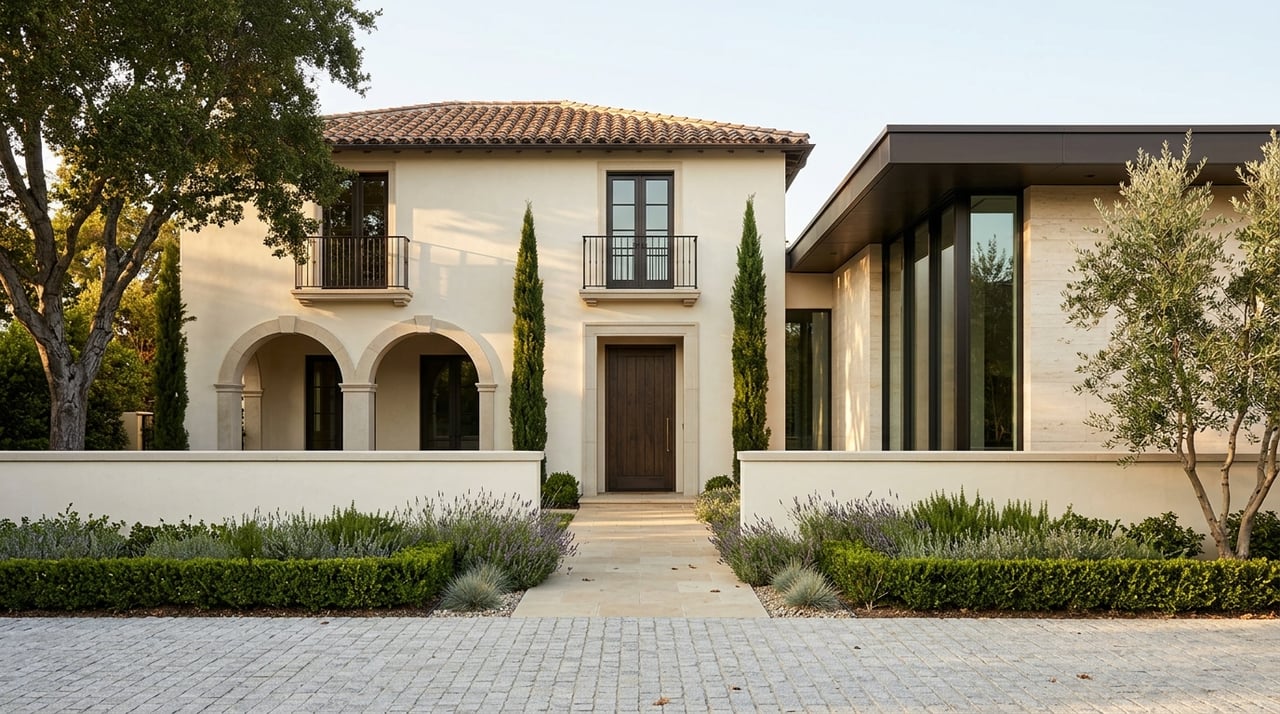
If you are shopping or selling at the top of the Palo Alto market, one question tends to shape everything else: do you want the polish of a modern luxury home or the character of a historic one? In a city where much of the housing stock dates back decades, that choice is especially meaningful. Understanding how these two categories differ can help you make a smarter decision about lifestyle, renovations, resale, and long-term value. Let’s dive in.
Why this choice matters in Palo Alto
Palo Alto is not a market where luxury means just one thing. The city’s housing stock is older than many buyers expect, with the median housing unit built in 1955. About 47% of units were built before 1959, and 13.1% were built in 1939 or earlier.
That age profile helps explain why luxury inventory often splits into two clear paths. On one side, you have architecturally significant older homes with established presence and historic context. On the other, you have replacement homes and newer construction designed around current expectations for layout, systems, and ease of living.
This is also a very high-value market. Census QuickFacts places the median value of owner-occupied housing units in Palo Alto at $2,000,000+, and Redfin reported a March 2026 median sale price near $3.5 million. In other words, both historic and modern homes can occupy the luxury tier, but they appeal to buyers for different reasons.
What defines a historic luxury home
In Palo Alto, historic luxury is about more than age alone. It usually means a home that reflects an earlier period of the city’s development, often with preserved architectural details, traditional proportions, and a strong connection to the streetscape around it.
Historic homes are not limited to one pocket of town. City historic documents reference the Seale Addition neighborhood, sometimes called Old Palo Alto in present-day real estate marketing, and officially recognized historic districts include Professorville and Ramona Street. The city established its Historic Inventory in 1979 and originally included around 500 properties, generally near downtown and adjacent early-development areas.
Professorville as a key example
Professorville is one of the clearest examples of Palo Alto’s historic luxury category. The district covers about 65 acres southeast of downtown, was listed in the National Register in 1979, and its expanded local district includes nearly 200 residential properties.
Most homes there date from the 1890s through 1929. The city describes the area as having a strong sense of place and time tied to Palo Alto’s heritage. For buyers who care about architectural pedigree and a recognizable historic setting, that context can be a major part of the appeal.
Historic luxury often means craftsmanship
Historic homes in Palo Alto usually emphasize proportion and detail rather than raw size. City design guidance for Professorville describes earlier homes as having relatively simple massing, controlled scale, and strong front façade planes.
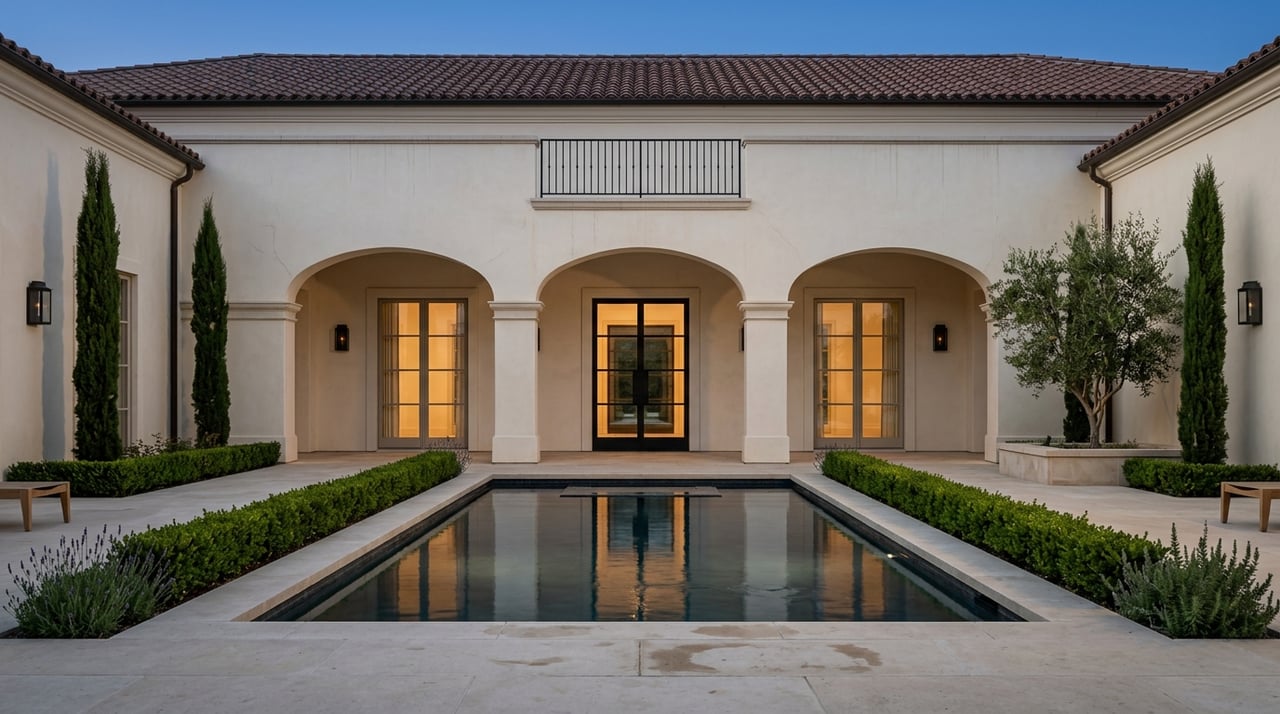
You also see recurring architectural influences such as Craftsman, Colonial Revival, Prairie, and Spanish Colonial Revival. Materials like wood shingles, stucco, clay tile, and traditional window proportions help create the visual identity many buyers are drawn to. In this segment, luxury often comes from craftsmanship, authenticity, and street presence.
What defines a modern luxury home
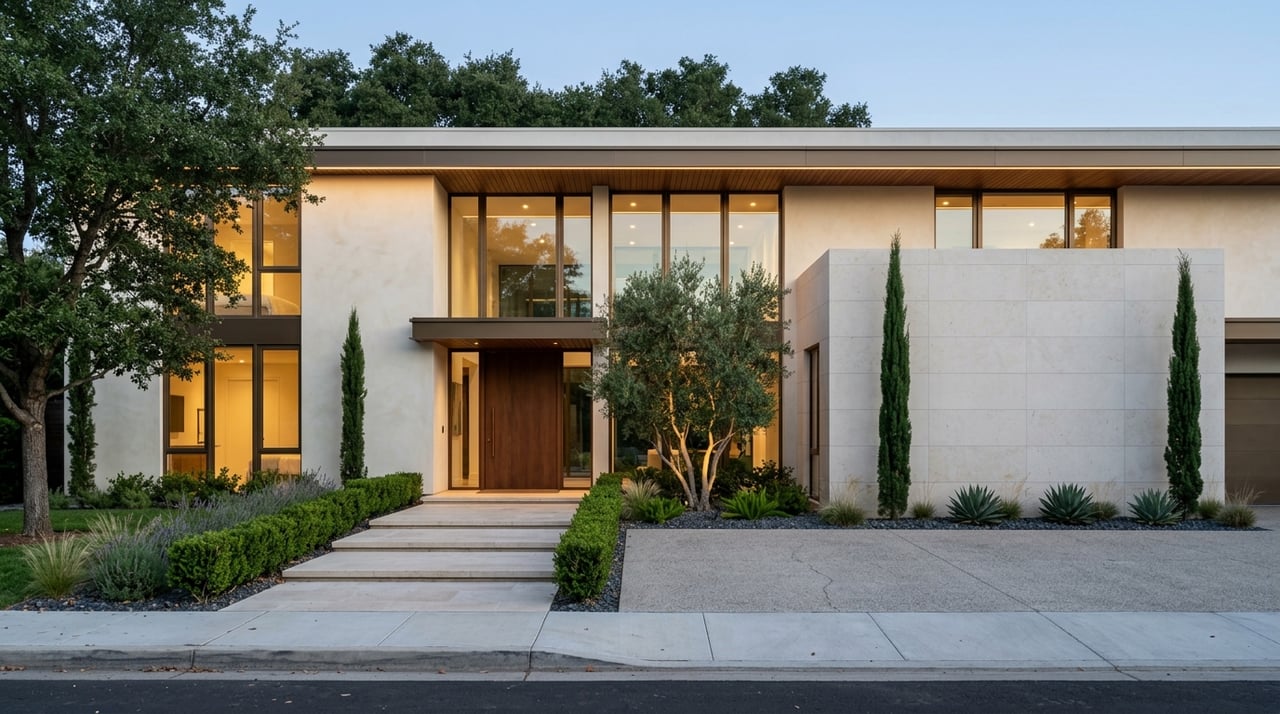
Modern luxury homes in Palo Alto usually serve a different set of priorities. They are often designed around open living, flexibility, integrated systems, and a more seamless indoor-outdoor experience.
That buyer preference is consistent with broader demand patterns. NAHB’s 2024 buyer survey found that 85% of buyers wanted an open kitchen-dining arrangement, 79% wanted the kitchen open to the family room, and 70% wanted the dining room open to the family room. The same survey found strong interest in home offices and first-floor laundry placement.
Layout drives modern appeal
If you want a home that feels ready for today without much reworking, modern homes often fit that goal more directly. Open kitchens, connected living spaces, and flexible rooms tend to support both daily life and entertaining.
Houzz’s 2024 kitchen study found that 43% of renovating homeowners made kitchens more open to nearby interior spaces, and 64% of those projects removed all wall separation. That reflects a larger shift toward function, flow, and ease of use.
Systems matter too
Modern luxury is not only about finishes. It is also about the infrastructure behind the walls.
NAHB survey results show strong demand for programmable thermostats, video doorbells, security cameras, wireless security systems, and multi-zone HVAC. Buyers also showed a preference for electric heating and cooling over gas. Houzz found that 43% of renovating homeowners upgraded systems during a kitchen renovation, which shows how often convenience and modernization go hand in hand.
Outdoor living is part of the package
Today’s luxury buyer often expects the yard to work like an extension of the house. NAHB ranked exterior lighting, patios, front porches, rear porches, and decks among the most wanted outdoor features.
Houzz’s 2026 outdoor-trends coverage also points to growing interest in more permanent outdoor kitchens and more integrated landscape design. In Palo Alto, that can make modern homes especially attractive when indoor-outdoor continuity is a priority.
How historic homes use space differently
One of the biggest practical differences between historic and modern homes in Palo Alto is how they sit on the lot. In historic districts, lot use tends to follow more established patterns.
Professorville design guidance emphasizes matching existing setbacks and street orientation, keeping primary façades facing the street, preserving open front lawns and tree canopy, and using visually permeable boundary treatments. Detached garages are preferred where possible because that was the historic pattern.
This creates a different feel from many new luxury builds. The focus is often on compatibility, rhythm, and visual continuity rather than maximizing every inch of interior volume or pushing the building envelope in a more dramatic way.
Renovation expectations are very different
If you are deciding between historic and modern, renovation planning deserves close attention. The process is often much different for an older home than for a newer one.
For historic properties, remodeling is usually about preservation and adaptation rather than starting from scratch. Palo Alto may require a Historic Resource Evaluation when a discretionary project proposes demolition, new construction, an addition, or substantial exterior alterations on a property more than 45 years old.
At the same time, the city says that minor exterior repairs, normal maintenance, interior work, and landscaping typically do not require historic review. That distinction matters because not every project triggers the same level of process.
Useful policy details for historic owners
If you own or are considering a qualified historic property, there are a few local policy tools worth knowing. Qualified historic buildings may use the California Historical Building Code, which can offer flexibility compared with the standard California code.
The city also describes a flag-lot option tied to a preservation covenant on certain R-1 parcels. However, Palo Alto does not currently have an official Mills Act process, even though a pilot program has been discussed.
Resale: convenience versus distinction
From a resale standpoint, the real tradeoff is often turn-key convenience versus architectural distinction. Neither is automatically better. It depends on what the next buyer values most.
Historic homes can stand out because of their preserved scale, original materials, and established historic context. They can also feel more memorable in a market where many homes compete on size and finish level.
Modern homes often connect more directly with current buyer preferences. Open room flow, office space, updated systems, first-floor utility areas, and indoor-outdoor living can reduce friction for buyers who want a simpler move-in experience.
What buyers often respond to
For historic homes, the strongest value signals are usually:
- Preserved scale and exterior character
- Visible original materials and detailing
- Documented permits and clear remodeling history
- A straightforward explanation of the home’s historic status
For modern homes, the strongest value signals are usually:
- Newer systems and updated infrastructure
- Functional room flow
- Energy-minded upgrades
- Low-friction, turn-key usability
Which type of luxury fits you best?
If you are choosing between the two, start with your priorities instead of the label. A historic home may be the right fit if you care most about architecture, craftsmanship, and a setting with a strong sense of time and place.
A modern home may be a better fit if you want open living, simplified maintenance, integrated technology, and a layout that reflects how many buyers live today. In Palo Alto, both paths can be compelling because both can sit firmly in the luxury category.
For sellers, the same logic applies in reverse. The best positioning strategy is usually to present the home clearly for what it is, rather than trying to force one luxury identity onto another. Historic homes benefit from careful storytelling around character and preservation, while modern homes benefit from showcasing design flow, systems, and ease of living.
In a market as valuable and nuanced as Palo Alto, that distinction can shape not only buyer interest, but also how effectively a home is presented from the start. If you are weighing a purchase, planning a sale, or evaluating how to position a distinctive property, a discreet, detail-driven strategy can make all the difference. Luxury Inc. offers private consultation, concierge transaction support, and bespoke marketing for high-value Palo Alto homes.
FAQs
What is the main difference between modern and historic luxury homes in Palo Alto?
- Historic luxury homes usually emphasize architectural character, preserved materials, and a strong connection to Palo Alto’s earlier development, while modern luxury homes usually emphasize open layouts, updated systems, and turn-key livability.
Are historic luxury homes common in Palo Alto?
- Yes. Palo Alto has an older housing stock overall, with a median housing unit built in 1955, and city historic resources identify recognized historic districts such as Professorville and Ramona Street.
What should you know before renovating a historic home in Palo Alto?
- Palo Alto may require a Historic Resource Evaluation for certain discretionary projects involving demolition, additions, new construction, or substantial exterior changes on properties more than 45 years old.
What features do buyers often want in modern Palo Alto luxury homes?
- Buyers often look for open kitchen and living spaces, home office space, updated systems, multi-zone HVAC, security features, and outdoor areas that function as part of the home.
Which type of Palo Alto luxury home may be easier to sell?
- Both can perform well, but they appeal in different ways. Historic homes often attract buyers who value authenticity and architectural distinction, while modern homes often appeal to buyers who prioritize convenience and contemporary livability.