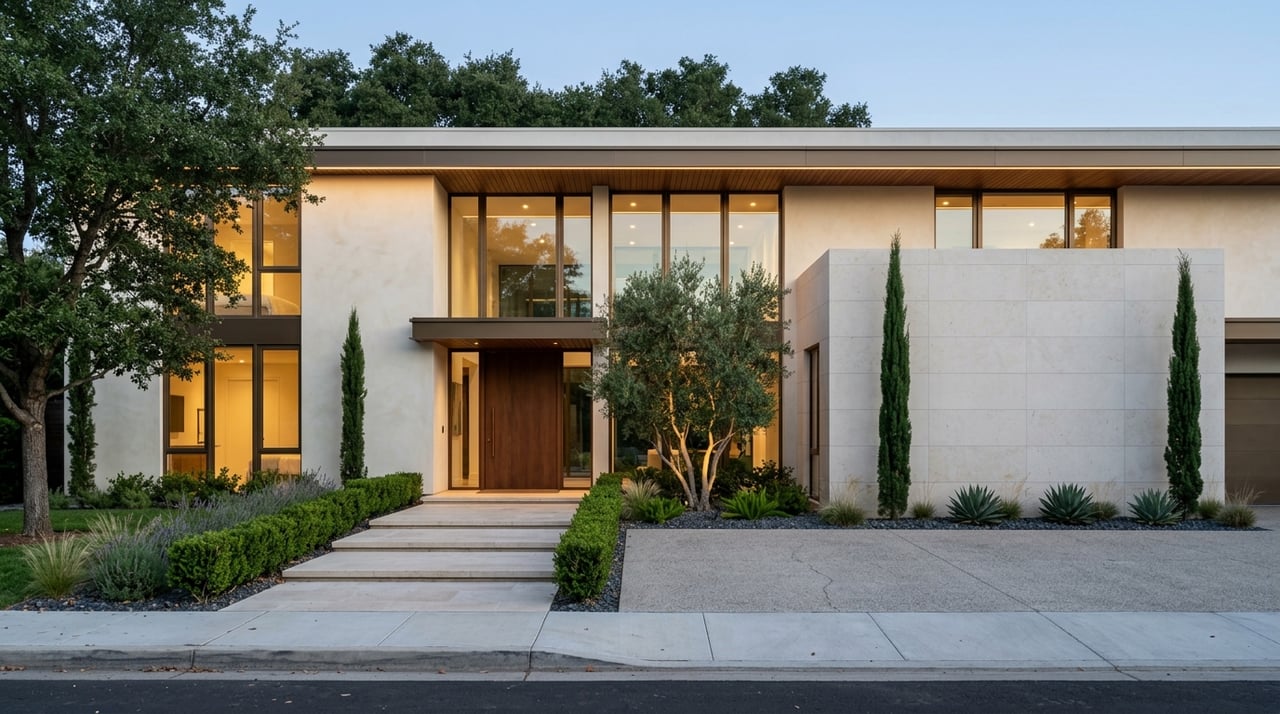
If you are looking for a Silicon Valley luxury home that balances prestige, privacy, and practicality, Cupertino likely belongs on your shortlist. For many buyers, the challenge is finding a place that feels connected to the region’s innovation economy without feeling defined by it. In Cupertino, you can find that mix, along with respected public school districts, established residential areas, and a limited but meaningful pipeline of newer housing options. Let’s take a closer look.
Cupertino blends innovation and everyday livability
Cupertino is often associated with Apple, but the city presents a broader identity than a single employer story. The city describes itself as a place where major tech campuses sit alongside tree-lined residential neighborhoods, creating a setting that feels both globally connected and locally grounded.
That balance matters if you want a home base that supports a demanding work life without giving up a quieter residential feel. Cupertino also reflects Silicon Valley’s international character. According to the city, more than 60 percent of residents age 25 and older hold a bachelor’s degree, and more than 40 percent were born outside the United States.
For luxury buyers, that often translates into a market with strong long-term appeal. You are not just buying proximity to work. You are buying into a city with an educated, globally connected population and a reputation that extends well beyond its boundaries.
Apple proximity remains a major draw
For buyers who work at Apple or collaborate with teams nearby, Cupertino offers obvious practical value. Apple Park sits in the northeastern part of the city, bounded by I-280, Wolfe Road, Homestead Road, and North Tantau Avenue.
That location makes day-to-day life easier for many executive and professional households. The City of Cupertino also notes that the city is accessible from I-280 and SR-85, as well as Lawrence and Foothill expressways. VTA bus routes serve the city, and Mineta San José International Airport is about 10 miles southeast.
In real life, that means your home can support more than just one commute. It can also support airport access, regional meetings, and connections to other South Bay job centers. For time-sensitive buyers, that kind of convenience is not a small perk. It is often a deciding factor.
School districts add to Cupertino’s appeal
For many relocating buyers, school access is part of the decision even if it is not the only one. Cupertino is served by Cupertino Union School District and Fremont Union High School District.
California Department of Education district profiles show Cupertino Union had 13,486 students in 2025-26, while Fremont Union High School District served 9,289 students. Fremont Union High School District states that it is consistently recognized as one of California’s most respected and highest-performing high school districts. Cupertino-area high schools in the district include Cupertino High, Homestead High, and Monta Vista High.
That school pipeline is one reason Cupertino is often considered alongside other sought-after Silicon Valley locations such as Palo Alto, Los Altos, and Saratoga. For luxury buyers, that can strengthen Cupertino’s value proposition as a place where lifestyle, location, and long-term demand come together.
Cupertino offers more than one housing path
One reason Cupertino appeals to a broad range of luxury buyers is that it is not a one-note housing market. The city’s planning documents point to a two-track story.
On one track, future growth is being concentrated in the eastern part of the city, especially near the former Vallco site and along major corridors. On the other, many established residential areas are expected to see minimal change over time.
That distinction is important if you are trying to choose between different living styles. Some buyers want a detached home in a lower-turnover setting. Others want a newer residence with more contemporary design, simplified upkeep, or a mixed-use environment that brings daily conveniences closer to home.
Established neighborhoods support a quieter feel
Cupertino’s General Plan divides the city into 21 planning areas and makes a clear distinction between special areas and neighborhoods. It states that neighborhood areas are expected to experience minimal future change.
For luxury buyers, that planning framework can be reassuring. It suggests that many established residential pockets are intended to remain relatively stable in character rather than being reshaped by rapid redevelopment.
That does not mean every street feels the same or every buyer wants the same thing. It does mean Cupertino can offer more residential calm than some buyers expect when they first think of a major Silicon Valley employment hub.
Newer projects expand buyer options
If you prefer newer construction or a more contemporary product type, Cupertino does have real options in the pipeline and in active development areas. Current city project pages identify The Rise at the former Vallco site, Coach House on South De Anza, and Westport Cupertino.
These projects support the idea that you do not necessarily have to leave Cupertino to find newer attached or mixed-use housing. That can appeal to buyers who want a modern lock-and-leave residence, updated amenities, or a lower-maintenance ownership experience within the city.
The city also notes that many priority housing sites are planned along major corridors to reduce traffic and support a more compact development pattern. In practice, that can create a different kind of suburban experience than you might find in markets dominated almost entirely by large-lot detached homes.
Walkability and access matter here
Luxury in Silicon Valley is not only about square footage or lot size. For some buyers, it is also about how smoothly a home fits into everyday life.
Cupertino’s planning approach places many future housing sites near major corridors and adjacent to neighborhoods. That supports a more walkable and connected pattern in certain parts of the city.
If you value the ability to stay close to key services, commute routes, and commercial areas, Cupertino can be especially attractive. You may find that the city offers a more practical rhythm than some purely residential luxury enclaves, while still preserving quieter pockets in established areas.
Market conditions reinforce Cupertino’s reputation
Cupertino’s housing market remains highly competitive. Redfin reported that the city’s median sale price was $3.359 million in March 2026, up 16.2 percent year over year. The same report noted homes were selling in about 9 days and receiving an average of 4 offers.
Those figures do not define every segment of the market, but they do reinforce a broader point. Cupertino continues to attract strong demand in a supply-constrained environment.
For luxury buyers, that usually means preparation matters. You may need to move quickly when the right property appears, especially if you are targeting a specific school district alignment, commute pattern, or housing style.
Why affluent buyers keep Cupertino in the conversation
Cupertino appeals to Silicon Valley luxury buyers because it solves for several priorities at once. It offers close access to Apple and other South Bay employment centers, respected public school districts, and a housing mix that includes both established neighborhoods and newer development options.
It also offers something harder to quantify but easy to feel once you spend time there. Cupertino can feel discreet. It is globally relevant, but many parts of it remain residential in tone and relatively understated in presentation.
For buyers who want substance over flash, that combination can be very compelling. You are not choosing between convenience and livability. In many cases, Cupertino gives you a credible version of both.
What to evaluate before you buy
If Cupertino is on your list, it helps to define your priorities early. The right property often depends on how you rank commute access, school district alignment, home age, lot size, and tolerance for future nearby development.
A useful starting checklist includes:
- Your preferred commute routes, especially to Apple Park or other South Bay campuses
- Whether you want an established detached-home setting or would consider newer mixed-use or attached options
- Your target home style, such as remodeled traditional, new construction, or contemporary design
- Your comfort level with homes near major corridors versus quieter interior neighborhood locations
- Your timeline, especially in a market where desirable homes can move quickly
The more clearly you define those priorities, the easier it becomes to narrow Cupertino into the areas and product types that best fit your goals.
If you are weighing Cupertino against other top Silicon Valley markets, a discreet, data-informed buying strategy can make the search far more efficient. To schedule a private consultation, connect with Luxury Inc..
FAQs
Why do luxury buyers consider Cupertino instead of other Silicon Valley cities?
- Cupertino appeals to many luxury buyers because it combines Apple proximity, access to major commute routes, respected public school districts, established residential areas, and a limited but real supply of newer housing options.
Does Cupertino offer new construction for luxury buyers?
- Yes. City project pages show active or planned developments such as The Rise, Coach House on South De Anza, and Westport Cupertino, which expand options for buyers who want newer residences.
Are all Cupertino neighborhoods expected to change significantly?
- No. Cupertino’s General Plan states that neighborhood areas are expected to experience minimal future change, while more concentrated growth is planned in specific areas and along major corridors.
Is Cupertino mainly attractive for Apple employees?
- No. Apple proximity is a major advantage, but Cupertino also appeals to buyers who value its residential feel, access to transportation routes, public school districts, and strong overall market demand.
How competitive is the Cupertino housing market?
- Research cited in this article shows Cupertino remained a high-demand market in March 2026, with a median sale price of $3.359 million, homes selling in about 9 days, and an average of 4 offers.