Looking for luxury new construction in Cupertino often starts with one simple question: where can you find a home that feels truly custom while staying close to the campuses that shape Silicon Valley? If you are a tech executive, investor, or high-net-worth buyer, you are likely balancing commute efficiency, design standards, privacy, and long-term value all at once. The good news is that Cupertino offers a compelling mix of prestige, location, and site-specific opportunity. Let’s dive in.
Why Cupertino Stands Out
Cupertino sits in the middle of a powerful tech corridor, with Apple Park in Cupertino and major Google and NVIDIA locations nearby in Mountain View, Sunnyvale, San Jose, and Santa Clara. For buyers who want access to major campuses without giving up a residential setting, that location is a major draw.
The city is also a high-value housing market by any measure. Census QuickFacts reports a median household income of $234,707 and a median value of owner-occupied housing units of $2,000,000 or more. That context matters because it helps explain why new construction in Cupertino often aims for a premium standard in both design and finish.
Cupertino’s general plan describes the city as mostly suburban, with predominantly single-family subdivisions and distinct commercial and employment centers. It also notes a difference between areas in the western foothills, which tend to have larger residential lots and open space, and areas east of Highway 85, which are more urban with smaller lots and more commercial development along major boulevards.
Why New Construction Is Different Here
In many markets, luxury new construction can mean a new subdivision with many similar homes. In Cupertino, the story is usually different. Because the city is already heavily built out, much of the new high-end single-family inventory is more likely to come from teardown and rebuild projects or major remodels rather than large greenfield developments.
That creates a more custom feel, but it also means every parcel needs to be evaluated on its own merits. Lot size, width, setbacks, privacy conditions, and review requirements can all shape what is possible. In Cupertino, the best new construction opportunities are often about finding the right site, not just the right floor plan.
How R1 Zoning Shapes Luxury Homes
Cupertino’s single-family R1 districts are intended to create, preserve, and enhance low-density detached homes while maintaining light, air, privacy, and neighborhood compatibility. The city also requires R1 parcels to be constructed or remodeled in accordance with the R1 Ordinance. For luxury buyers and developers, that means zoning is not background noise. It is a core part of the value story.
The city’s residential checklist lays out a clear lot-size ladder across R1 districts:
- R1-5 requires a minimum lot area of 5,000 square feet
- R1-6 requires 6,000 square feet
- R1-7.5 requires 7,500 square feet
- R1-10 and R1-10a require 10,000 square feet
Cupertino also explains that R1-x means the minimum lot area equals the district number multiplied by 1,000 square feet. For example, R1-10 indicates a 10,000-square-foot minimum lot area.
For higher-end projects, larger lot districts can create more flexibility for setbacks, landscaping, privacy buffering, and indoor-outdoor flow. R1-10a is especially notable because it also requires a 75-foot minimum lot width and deeper setbacks than R1-10. Those dimensions can support a more expansive, composed presentation that feels distinctly less like generic infill.
Special Districts Matter
Not all single-family parcels in Cupertino function the same way. The city has several special R1 variants that can materially affect the design path:
- R1-xi is a single-story overlay district limited to 18 feet in height
- R1-e is the Eichler district
- R1-a is a semi-rural district
- R1C is a single-family cluster district designed to use land more creatively while preserving open space
If you are targeting a bespoke home, these district details matter early. A site in an Eichler area, for example, may call for a very different design approach than a parcel in a larger-lot district where a contemporary or transitional build might fit more naturally within the city’s review framework.
What Higher-End Projects Usually Have
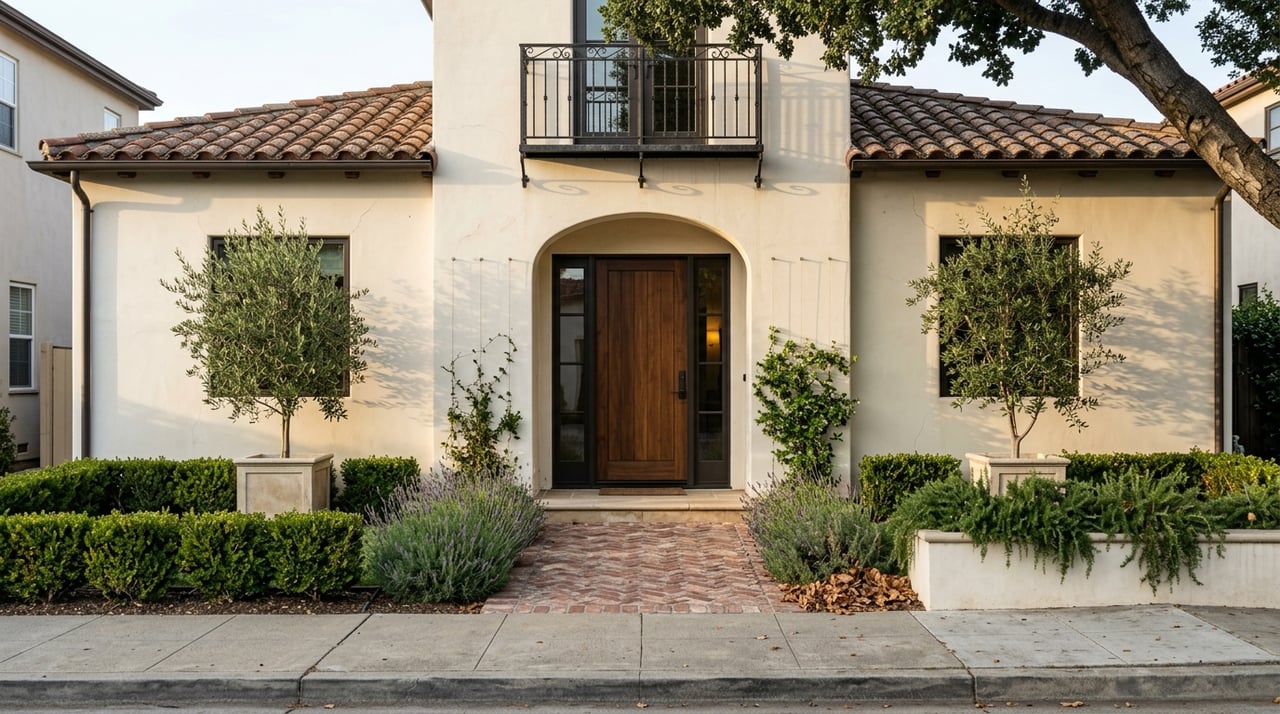
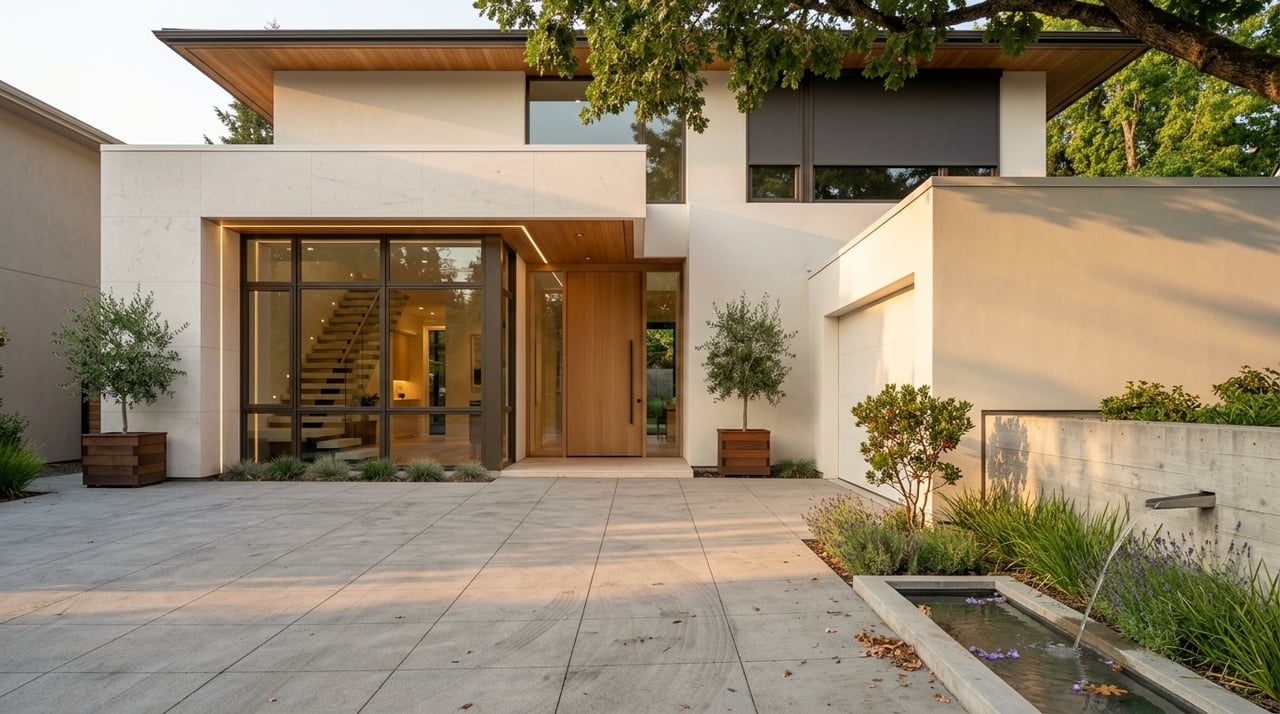
Cupertino’s code does not define an official luxury category, but the difference between a premium project and a more generic one is usually easy to spot. Higher-end homes often stand out through larger lots, wider frontages, deeper setbacks, stronger privacy planning, and a more intentional relationship between architecture and landscape.
That matters because Cupertino’s review standards place real emphasis on privacy, scale, articulation, and materials. In practical terms, the homes that feel most elevated are often the ones that do more than maximize square footage. They use the site well, create better transitions between indoor and outdoor spaces, and look carefully resolved from the street.
Common features that help a new home read as higher-end in Cupertino include:
- Articulated façades
- Varied rooflines
- Screened mechanical equipment
- Layered landscaping
- Materials that support privacy and setback design goals
These are not luxury labels from the city. They are reasonable conclusions drawn from Cupertino’s design-review standards and what tends to distinguish more refined projects in this market.
Two-Story Design Requires Extra Attention
If you are considering a two-story new build or major addition, Cupertino’s process becomes especially important. The city notes that one-story homes or first-story additions that do not need an exception can often move directly to building permits. By contrast, two-story homes, second-story additions, and larger remodels require separate R1 or two-story applications and neighborhood noticing.
The city also treats upper-story massing carefully. Homes with second-story side setbacks under 15 feet must offset massing with higher-quality architectural features and materials. Cupertino also requires privacy planting for certain second-story windows and decks.
For luxury buyers and investors, this is a key point. A successful two-story project is not just about adding area. It is about designing around privacy, presentation, and compatibility from the start so the finished home feels polished rather than overbuilt.
ADUs, JADUs, and SB9 Add Flexibility
For many buyers, the appeal of a Cupertino luxury property is not limited to the main residence. Parcel flexibility can also play a major role in long-term value and usability.
Cupertino’s SB9 materials state that the city has approved objective standards and processes for SB9 subdivision and ministerial approvals. City materials also describe a typical R1 lot as supporting one residence, one ADU, and one JADU, subject to parcel-specific constraints. The city’s ADU handout further shows that detached and attached ADUs have their own size and setback rules.
That flexibility can matter in several ways:
- Space for guests or extended household use
- A separate office or studio setup
- Added utility for long-term ownership planning
- More resale optionality on eligible parcels
Of course, these options depend on the specific site and applicable standards. In Cupertino, parcel details are everything.
Landscaping Is Part of the Luxury Equation
In a market like Cupertino, landscaping is not just cosmetic. It is often part of the entitlement and review package. The city’s residential checklist and landscaping materials show that new homes and rehabs can be subject to water-efficient landscape review and related documentation.
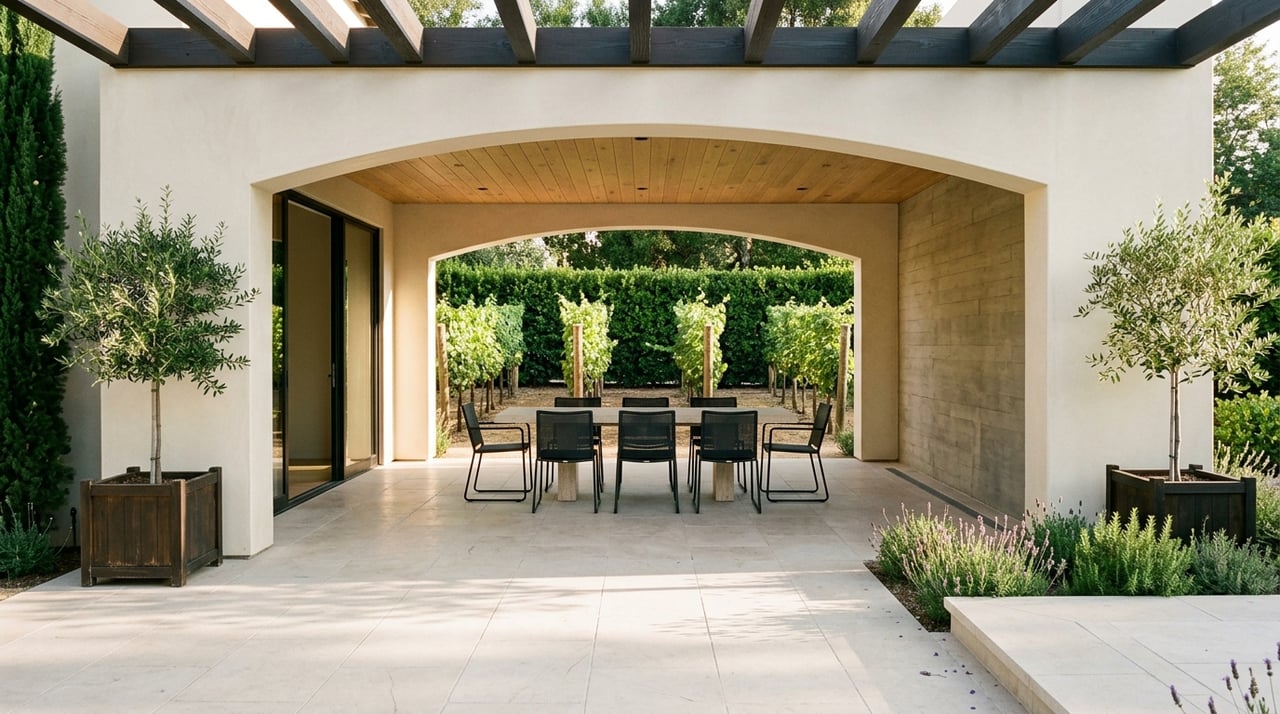
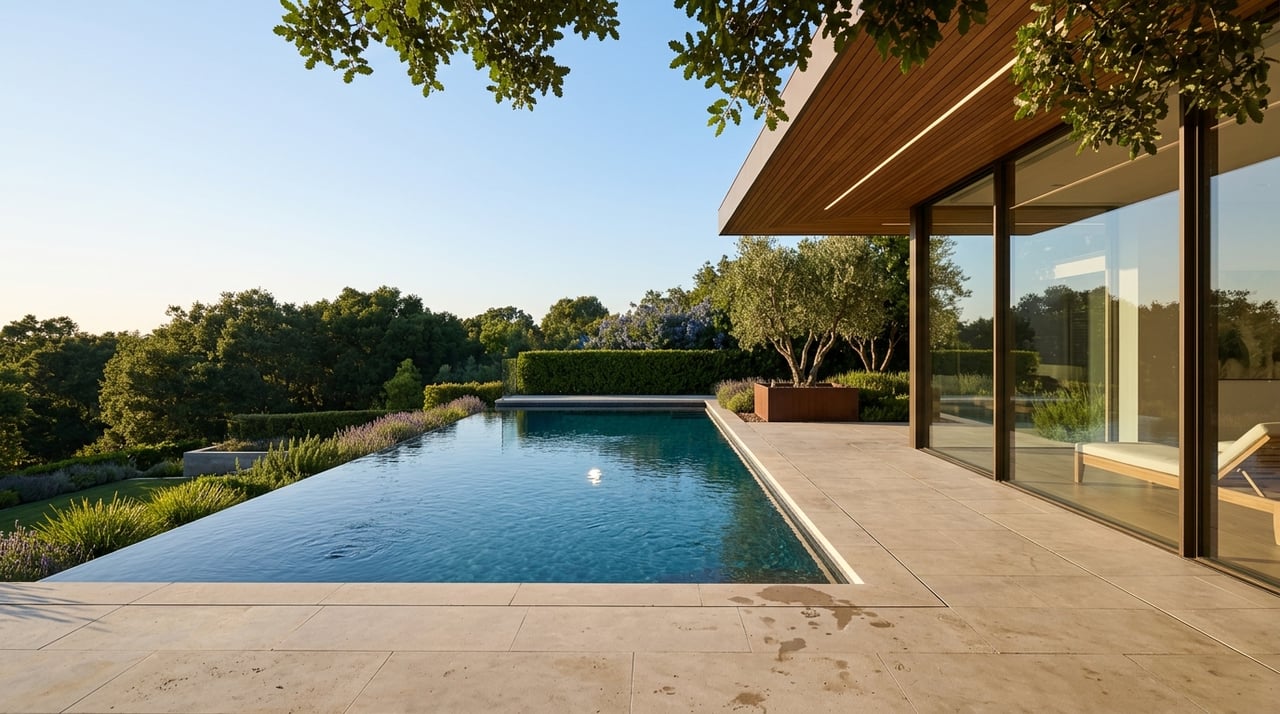
That fits naturally with current buyer expectations. In luxury new construction, outdoor spaces are expected to feel intentional, efficient, and integrated with the architecture. Well-planned landscaping can also support privacy, soften upper-story views, and improve overall curb presence.
For a premium home, the landscape plan is often part of what makes the property feel finished. It is not an afterthought. It is part of the story.
Smart-Home Features Are Now Baseline
Today’s luxury buyer often expects more than beautiful finishes. Smart-home integration is increasingly part of the baseline package. CEDIA describes smart homes as integrating devices such as smart thermostats, lights, security cameras, door locks, and speakers. NAHB’s 2024 design trends also point to continued buyer interest in security cameras, wired security systems, programmable thermostats, video doorbells, multizone HVAC, energy management systems, lighting control systems, and energy-efficient features.
In Cupertino, those features pair well with the city’s emphasis on modern building compliance and water-efficient landscaping. For many buyers, sustainability and convenience are not separate upgrade categories. They are built into what a premium home should already deliver.
What Buyers Should Evaluate First
If you are shopping for Cupertino luxury new construction near major campuses, it helps to focus on a few core questions before falling in love with finishes alone.
Confirm the R1 subtype
Start by identifying which R1 district applies to the property. The difference between R1-7.5, R1-10, and R1-10a can affect lot-area expectations, width requirements, setbacks, and overall design potential.
Review lot width and setbacks
A large lot is important, but frontage and setbacks can be just as meaningful. Wider lots and deeper setbacks often support better privacy, stronger curb appeal, and a less compressed feel.
Check two-story and privacy triggers
If the home includes a second story or major upper-story massing, review whether neighborhood noticing, higher-quality material expectations, or privacy planting requirements may apply. These details can shape both timing and design.
Ask about ADU or SB9 pathways
On eligible parcels, ADU, JADU, or SB9 potential may add meaningful flexibility. Even if you do not plan to use those options today, they can support future utility and resale appeal.
Look at the landscape plan
A premium home should not stop at the building envelope. In Cupertino, a thoughtful landscape approach can support compliance, presentation, and day-to-day enjoyment.
Why Presentation Still Matters
In a high-value, design-aware market like Cupertino, the quality of the home is only part of the equation. How the property is positioned, presented, and understood also matters, especially for custom new construction and high-end rebuilt homes.
That is where a boutique, marketing-led brokerage can make a meaningful difference. When a property has architectural nuance, site-specific value, or future flexibility tied to lot characteristics, the story needs to be told with precision. Buyers at this level are not just comparing square footage. They are comparing quality, privacy, optionality, and long-term fit.
If you are considering buying, selling, or evaluating a luxury new construction opportunity in Cupertino, a discreet and detail-oriented strategy can help you see the full picture. To schedule a private consultation, connect with Luxury Inc..
FAQs
What makes Cupertino attractive for luxury new construction near major campuses?
- Cupertino offers a suburban single-family setting within a dense tech-campus corridor, including Apple Park in Cupertino and major nearby Google and NVIDIA locations in surrounding cities.
What zoning should you review for a Cupertino luxury home?
- You should review the property’s R1 subtype, since minimum lot area, width, setbacks, and design potential can vary by district, including R1-5, R1-6, R1-7.5, R1-10, and R1-10a.
What is important about R1-10a lots in Cupertino?
- R1-10a lots require at least 10,000 square feet, a 75-foot minimum lot width, and deeper setbacks than R1-10, which can support a more expansive site layout.
Do two-story homes in Cupertino face added review requirements?
- Yes. Cupertino states that two-story homes, second-story additions, and larger remodels require separate applications and neighborhood noticing, and some designs may also trigger privacy planting and added massing considerations.
Can a Cupertino luxury property include an ADU or JADU?
- In many cases, city materials describe a typical R1 lot as potentially supporting one residence, one ADU, and one JADU, subject to parcel-specific constraints and applicable rules.
Why does landscaping matter for Cupertino new construction?
- Landscaping can be part of the review and entitlement package, and water-efficient landscape planning can also support privacy, curb presence, and a more complete luxury presentation.