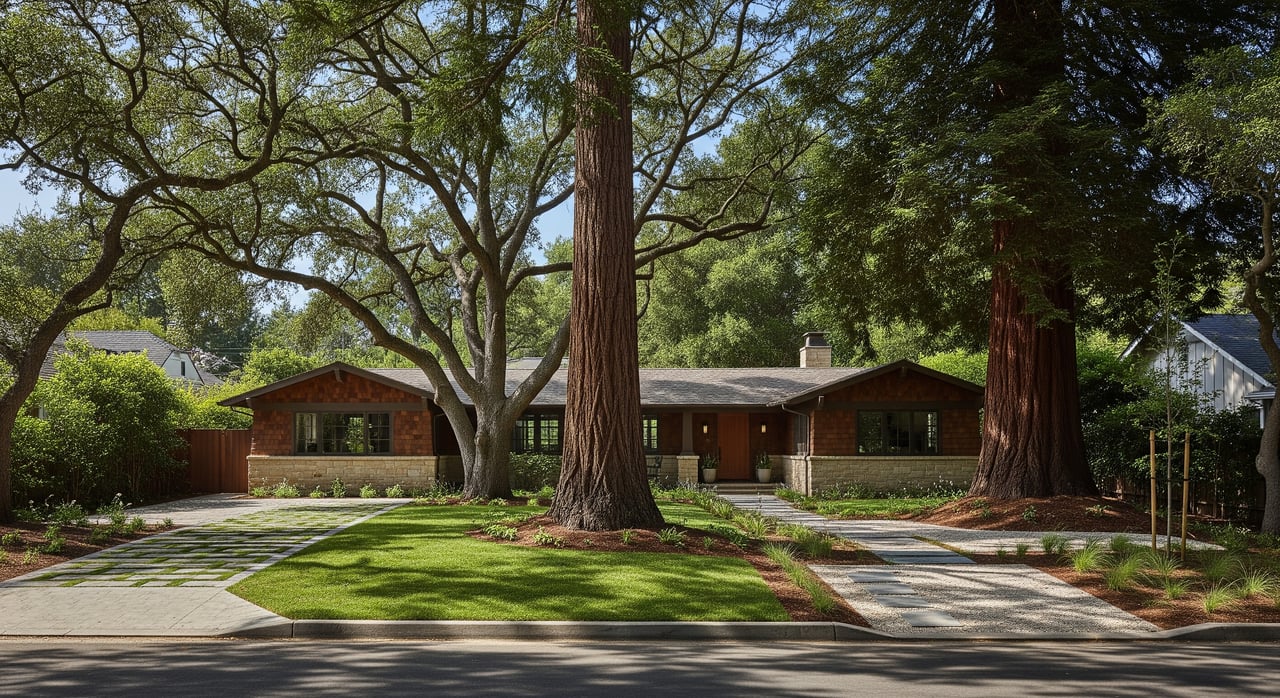
Thinking about adding on, building new, or buying a lot in Menlo Park? What you can build is defined less by how big the parcel looks and more by rules that shape your buildable area. Lot coverage, floor area ratio, setbacks and heritage tree protections can expand or limit your plan in meaningful ways. This guide breaks down what those terms mean in Menlo Park, how they affect timelines and budgets, and what to check before you write an offer or hire an architect. Let’s dive in.
Lot coverage, FAR and setbacks: the essentials
Lot coverage is the percentage of a parcel covered by structures and other defined surfaces, often including the main house, garages and covered porches. The City’s definition of what counts is specific, so you need to confirm which features are included for your zoning district. Lot coverage limits cap how much ground‑level footprint you can add.
Floor Area Ratio (FAR) is the ratio of total permitted interior floor area to lot size. Even if you meet setbacks and lot coverage, FAR can still limit how much square footage you can build. Think of FAR as the ceiling for interior area, separate from footprint constraints.
Setbacks are the minimum distances you must maintain from the front, sides and rear property lines. They define the buildable envelope and often dictate the width and depth available for additions or a new home. Side setbacks are commonly the pinch point on narrow lots.
Impervious surface and drainage
Impervious surfaces, like roofs, driveways and many patios, do not allow water to soak into the ground. Some cities treat impervious area separately from lot coverage. In Menlo Park, stormwater control and drainage often become part of plan review, especially with larger projects. You should ask your design team to calculate impervious area early so you know if drainage measures or limits could apply.
What’s typical in Menlo Park
Menlo Park rules are parcel‑specific and tied to the zoning district and any overlays. Single‑family lot coverage limits commonly fall within roughly 30% to 50% in Bay Area cities, and Menlo Park districts often land in that general range. The exact percentage for your parcel, along with height and FAR, must be confirmed with the City’s Planning Division and municipal code.
Setbacks vary by district and lot size. Side setbacks can be as little as around 5 feet in some zones, while front and rear setbacks are usually larger. If you are considering a lateral addition, side setbacks often determine whether expansion toward a lot line is feasible without seeking an exception.
Accessory Dwelling Units (ADUs) are guided by state law alongside local ordinance. Whether an ADU counts toward lot coverage or triggers specific concessions depends on current local rules. If an ADU is part of your plan, verify Menlo Park’s ADU policy before you finalize a site concept.
Heritage trees: what you need to know
A heritage or protected tree is typically defined by species and trunk diameter at breast height (DBH). Native oaks and other significant species are commonly protected once they reach certain sizes. In Menlo Park, removing or cutting a protected tree usually requires a permit, an arborist’s report that explores alternatives, and mitigation if removal is allowed.
If the City approves removal, you can expect replacement requirements, such as planting multiple new trees with specified caliper sizes or paying an in‑lieu fee. Illegal removal or damage carries penalties and can complicate future permits. If you are buying, it is important to check for any prior tree violations on record.
How trees shape your design and construction
Tree Protection Plans (TPPs) are often required when a heritage tree is present, even if you plan to keep the tree. A TPP sets standards like fenced Root Protection Zones (RPZs), no‑grade changes within the RPZ, limited trenching, and arborist monitoring during construction. These measures can constrain where you place additions, driveways and utilities.
Root zones affect foundation choices too. To avoid damaging roots, you may need pier or smaller spread footings, or to shift the building footprint. Drainage and grading near RPZs can be sensitive; raising or lowering grade around large roots may harm long‑term tree health. Your civil engineer and arborist should coordinate on these details during schematic design.
What this means by project type
Small interior remodels
If you stay within the existing footprint, lot coverage typically does not change. Inside‑the‑walls work is less likely to affect root zones, though equipment access still needs planning. Always confirm whether any nonconforming site conditions could be triggered by other exterior changes.
Additions
Footprint expansions count toward lot coverage. Second‑story additions impact FAR and height but not lot coverage unless you add covered projections. Side‑yard setbacks commonly limit lateral expansion, so your usable width can shrink faster than you expect. Heritage trees may determine where an addition can sit or what foundation type you can use.
Accessory Dwelling Units (ADUs)
ADU feasibility depends on state rules and Menlo Park’s current ordinance. Placement is key: a garage conversion or carefully positioned detached ADU can unlock value when lot coverage or tree constraints are tight. Check how local rules treat lot coverage, setbacks, parking and tree protection before you commit to a specific ADU location.
Ground‑up new construction
New builds face every cap at once: lot coverage, FAR, setbacks, height, stormwater and heritage trees. Expect a full plan check and, when trees are involved, arborist reports and TPPs. Soil and grading near large roots can require specialized civil or geotechnical solutions. If a variance is needed, plan for more review time and possible public notice.
Due‑diligence checklist before you buy or design
- Ask Menlo Park Planning for a zoning confirmation covering permitted lot coverage, setbacks, FAR, height and any overlays that apply to the parcel.
- Request copies of recorded easements and prior building permits. Easements for utilities or drainage can reduce buildable area.
- Order a current survey or plot plan showing all structures and tree locations with DBH where available.
- Have a certified arborist complete a preliminary tree survey to flag heritage or protected trees on or near the lot.
- Ask the City whether there are any past code violations or unresolved tree enforcement actions tied to the property.
- Review current ADU rules if an ADU factors into your plan.
If you move into design:
- Budget for a formal arborist report and Tree Protection Plan early, before finalizing the site plan.
- Engage a civil engineer to calculate impervious area and design drainage and grading that respect root zones.
- Ask your architect to create a conceptual buildable envelope that overlays setbacks, RPZs, easements and any nonconforming conditions.
- Confirm whether neighborhood, architectural or historical review applies to larger projects.
Timeline and cost impacts to expect
Tree permit and heritage processes commonly add weeks to months to pre‑permit timelines when removals or mitigation are involved. Build this into your planning. Arborist reports, monitoring, specialized foundations and required replacement plantings can materially increase budgets compared with lots without protected trees.
If your project requires a variance for setbacks or lot coverage, expect a more involved discretionary review with neighbor notification and possible hearings. Those steps can extend timelines further, so factor them into offer and hold periods for investment deals.
Buildable envelope: how to get clarity fast
The fastest way to cut through uncertainty is to establish a realistic envelope early. Combine a recent survey with verified zoning data, then overlay setbacks, easements and arborist‑defined RPZs. This layered map shows where you can place footprint and where structural or grading limits apply.
From there, test fit different schemes: a lighter footprint with a second story, an ADU tucked within clear zones, or a reoriented driveway to preserve roots. This approach gives you a confident read on what is possible before you invest in full architectural plans.
Strategy tips to unlock value
- Favor vertical over horizontal. When lot coverage binds or RPZs limit ground area, a second story can deliver space without expanding footprint.
- Right‑size the foundation. Where roots are near, consider piers or smaller footings designed with your engineer and arborist.
- Place utilities smartly. Reroute trenching outside RPZs or use specialized techniques to avoid root damage.
- Use ADUs strategically. A garage conversion or detached ADU in a clear zone can add utility without triggering footprint constraints in sensitive areas.
- Confirm before you commit. Because definitions and thresholds are zoning‑specific, verify the City’s current standards for your parcel every time.
When to bring in specialists
- Planning staff: to confirm zoning, setbacks, lot coverage, FAR and height limits for the exact parcel.
- Certified arborist: for tree identification, DBH measurements, TPPs and permit support if removal is proposed.
- Civil engineer: to model impervious surfaces, drainage and grading, especially near RPZs.
- Geotechnical engineer: when soils or root conditions suggest specialized foundations or retaining solutions.
- Architect: to translate constraints into a buildable envelope and a site plan that balances space, light and tree health.
You get the best results when these specialists coordinate early. A short pre‑design huddle often saves months later in the process.
The bottom line for Menlo Park lots
Lot coverage, FAR and setbacks define what you can build. Heritage trees can further limit where you build and how you construct it. With the right due diligence, you can anticipate these constraints, protect timelines and control costs. Start with zoning confirmation, a preliminary arborist survey and a conceptual envelope, and you will move forward with confidence.
If you want a discreet, end‑to‑end process with curated guidance and introductions to trusted local specialists, connect with the team at Luxury Inc.. Schedule a private consultation and we will help you evaluate options and design a clear path to your goals.
FAQs
What is lot coverage in Menlo Park and why does it matter?
- Lot coverage is the percentage of your lot covered by defined structures and surfaces; it caps ground‑level footprint and directly affects additions and new‑build site plans.
How does FAR differ from lot coverage for Menlo Park projects?
- FAR limits total interior square footage relative to lot size, while lot coverage limits footprint; meeting one does not guarantee you meet the other.
Do ADUs count toward lot coverage in Menlo Park?
- It depends on current local rules shaped by state law; confirm Menlo Park’s ADU treatment for your parcel before selecting a location or size.
What qualifies as a heritage tree in Menlo Park?
- Protected status is typically based on species and trunk diameter (DBH); the City’s ordinance and staff can confirm thresholds for your specific trees.
Can I remove a heritage tree to build a home or addition?
- Removal usually requires a permit, an arborist report showing necessity and, if approved, mitigation such as replacement plantings or in‑lieu fees.
How do heritage trees affect construction methods near my house?
- Expect Root Protection Zones, limits on grading and trenching, and potential engineered foundations or utility reroutes to avoid root damage.
How much time can tree permits add to a Menlo Park project?
- Heritage‑related reviews commonly add weeks to months before building permits, especially when removals, mitigation or discretionary review are required.