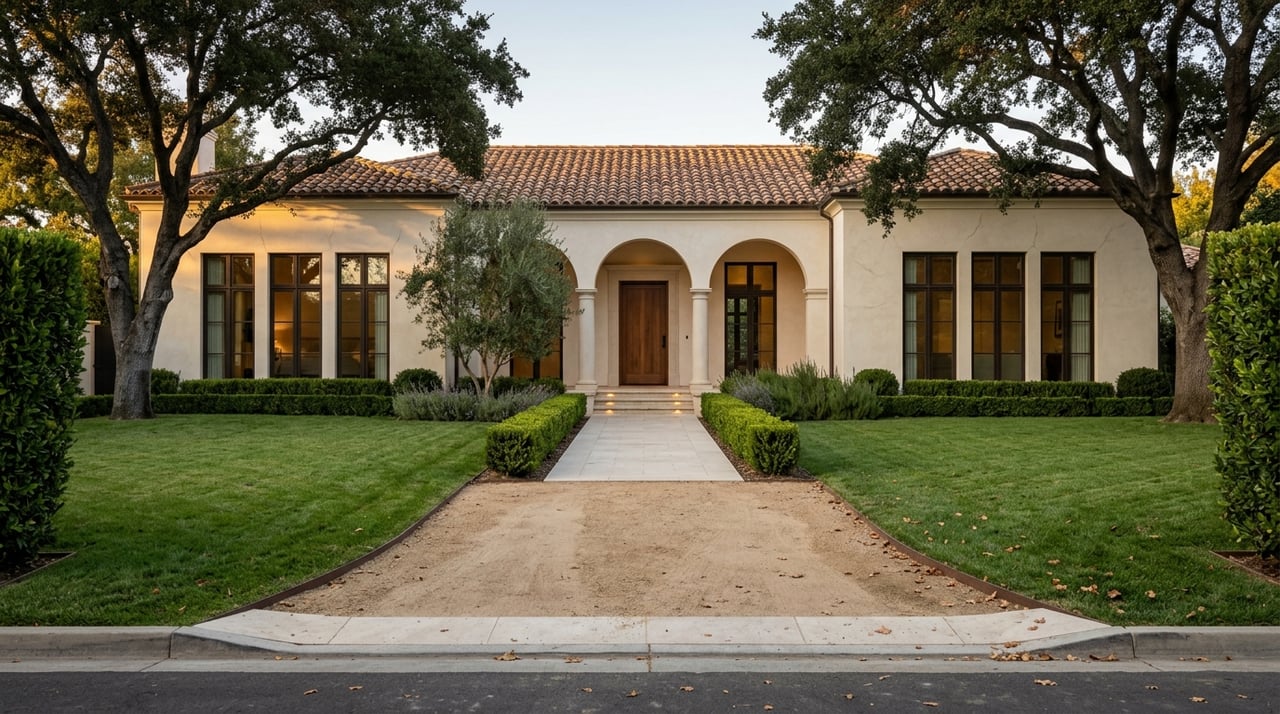
Choosing between Old Palo Alto and Crescent Park is not just about picking a prestigious Palo Alto address. It is about deciding how you want your home to live day to day, how much lot variety or neighborhood cohesion matters to you, and how you want to balance privacy, access, and market pace. If you are comparing estate neighborhoods in Palo Alto, this guide will help you understand the real differences so you can focus on the fit that matches your priorities. Let’s dive in.
Old Palo Alto vs Crescent Park at a Glance
At a high level, Old Palo Alto tends to feel more organic and historically layered, while Crescent Park feels more formally planned and park-like. That difference comes from how each neighborhood developed over time.
Old Palo Alto is known for its tree-canopied streets, large residential parcels, and broad architectural variety. Crescent Park, by contrast, grew as a more intentionally designed estate district, with an early plan that emphasized larger lots, planted streetscapes, and a cohesive sense of place, according to The Almanac’s neighborhood history of Crescent Park.
For many buyers, that becomes the central choice: do you prefer the more eclectic character of Old Palo Alto or the more composed grandeur of Crescent Park?
Neighborhood Character
Old Palo Alto feels historic and varied
Old Palo Alto stands out for its layered character. The neighborhood includes spacious parcels and a wide mix of architectural styles, which gives many streets a collected-over-time feel rather than a uniform one.
Palo Alto Online’s profile of Old Palo Alto notes styles that range from English traditional and Tudor to Moorish, Spanish Colonial, and Post-Modern. The same profile also highlights homes by Birge Clark, a key architect in Palo Alto’s early residential history.
If you value architectural individuality, mature landscaping, and a neighborhood that feels established in a less scripted way, Old Palo Alto often checks those boxes.
Crescent Park feels planned and park-like
Crescent Park has a different kind of appeal. It was introduced in 1924 as an upscale planned tract, with lot sizes averaging about half an acre and design standards intended to preserve its overall character, according to The Almanac.
That planning still shapes the experience today. Crescent Park is known for stately homes, long driveways, mature trees, and wide planted medians, especially along streets such as Southwood, Edgewood, and Forest Avenue. The result is a neighborhood that still feels eclectic, but usually more cohesive than Old Palo Alto.
Lot Size and Estate Presence
Old Palo Alto offers broad lot variety
One of Old Palo Alto’s biggest draws is parcel depth and variety. Current neighborhood descriptions cite lots averaging around 9,000 square feet, with some sources describing the typical lot as over 10,000 square feet and some parcels reaching 30,000 square feet.
That range matters if you are looking for flexibility. In practical terms, Old Palo Alto may appeal to you if you want a larger or more irregular parcel, mature gardens, or a site where the architecture and landscape feel highly individualized.
Crescent Park emphasizes larger planned parcels
Crescent Park’s estate identity is tied to its original subdivision pattern. Early lots averaged about half an acre, which helped create the generous setbacks, broad streetscapes, and long-driveway presentation the neighborhood is known for today, based on The Almanac’s reporting.
If your ideal setting includes a more composed streetscape and a stronger sense of visual continuity from one property to the next, Crescent Park may feel more aligned.
Walkability and Daily Access
Old Palo Alto scores higher for walk and bike access
If day-to-day mobility matters, Old Palo Alto currently has the edge. Redfin’s neighborhood data for Old Palo Alto shows a Walk Score of 66, Transit Score of 39, and Bike Score of 97. Crescent Park is rated at 57 for walkability, 41 for transit, and 81 for bikeability.
Old Palo Alto also benefits from strong access toward California Avenue and Stanford-oriented destinations. The City of Palo Alto’s Bicycle + Pedestrian Transportation Plan notes connections from downtown into Old Palo Alto and toward the California Avenue business district.
For buyers who want a more internally residential feel plus strong bike connectivity, Old Palo Alto often stands out.
Crescent Park offers stronger downtown proximity
Crescent Park’s location places you closer to Downtown Palo Alto and University Avenue. That can be a major advantage if your routine includes frequent dining, shopping, or commuting through the downtown core.
At the same time, Crescent Park has more corridor exposure. The neighborhood is bounded by San Francisquito Creek, Newell Road, Channing Avenue, and Middlefield Road, with University Avenue running through it and Highway 101 along the north side, according to The Almanac.
That connected location can mean more through-movement. In fact, the City of Palo Alto created a Crescent Park traffic calming project after residents raised concerns about cut-through traffic, congestion, and speeding, and the city later approved permanent improvements.
Schools and Boundary Verification
School assignment is address-specific
If schools are part of your home search, the most important point is simple: do not assume school assignment based on neighborhood name alone. Palo Alto Unified School District assigns students by residence within a boundary, and the district directs families to verify placement by address using its School Finder and enrollment guidance.
Current neighborhood guidance often associates Old Palo Alto with Walter Hays Elementary or Addison Elementary, plus Palo Alto High School. Crescent Park is commonly associated with Duveneck Elementary or Addison Elementary, Frank S. Greene Jr. Middle School, and Palo Alto High School.
But in both neighborhoods, elementary assignment can be street-specific. If this factor is important to you, verify the exact address early in your search.
Market Pricing and Competition
Crescent Park has recently led on median pricing
In the luxury segment, both neighborhoods trade in thin numbers, so median prices can move quickly. According to The Almanac’s 2024 neighborhood pricing report, Crescent Park was Palo Alto’s most expensive neighborhood in 2024 with a median sales price of $5.1 million.
Palo Alto Online’s first-half 2025 reporting placed Crescent Park at $5.93 million and Old Palo Alto at $5.6 million. That suggests Crescent Park has recently operated as the tighter, higher-pressure submarket on a median basis.
Old Palo Alto can reach higher headline numbers
Monthly snapshots tell another story about volatility. Redfin’s February 2026 Old Palo Alto market snapshot reported an $11.3 million median sale price on five homes sold, compared with $5.925 million in Crescent Park on five homes sold.
The sample sizes are small, so one standout estate sale can shift the median sharply. That is why annual or half-year data usually offers a clearer read than a single month in these luxury enclaves.
Crescent Park often moves faster
Speed and competition are also part of the equation. Redfin describes Old Palo Alto as somewhat competitive, with some homes receiving multiple offers and typical pendings around 14 days. Crescent Park is described as more competitive, with most homes getting multiple offers and hot homes often selling around 7% above list and going pending in about 9 days.
If you are a buyer, that can mean a more compressed decision window in Crescent Park. If you are a seller, it can point to strong demand when a well-positioned property comes to market.
Which Neighborhood Fits Your Priorities?
Choose Old Palo Alto if you want
- A more historic, organically developed neighborhood feel
- Greater architectural variety
- Large and sometimes more irregular parcels
- Stronger walk and bike scores
- Access toward California Avenue and Stanford-area destinations
Choose Crescent Park if you want
- A more formally planned estate setting
- A cohesive, park-like streetscape
- Strong proximity to Downtown Palo Alto and University Avenue
- A neighborhood that has recently shown tighter competition
- A more composed visual character from block to block
The Bottom Line
Old Palo Alto and Crescent Park are both premier Palo Alto estate neighborhoods, but they serve slightly different lifestyles. Old Palo Alto often appeals to buyers who want historical depth, architectural individuality, and stronger walk-bike convenience. Crescent Park often attracts buyers who prefer a more intentionally designed estate district with direct downtown access and a market that can move quickly.
If you are weighing the tradeoffs between the two, a private, property-by-property comparison can save time and bring the decision into focus. Luxury Inc. offers discreet guidance for buyers and sellers navigating Palo Alto’s top-tier estate market, with a marketing-first and concierge-driven approach designed to make complex transactions feel seamless.
FAQs
What is the main difference between Old Palo Alto and Crescent Park?
- Old Palo Alto generally feels more organic, historic, and architecturally varied, while Crescent Park feels more planned, cohesive, and park-like.
Which Palo Alto neighborhood has larger lots, Old Palo Alto or Crescent Park?
- Both are known for large parcels, but Old Palo Alto shows more lot variation, while Crescent Park is more closely tied to a planned pattern of generously sized estate lots.
Which neighborhood is closer to Downtown Palo Alto, Old Palo Alto or Crescent Park?
- Crescent Park is generally closer to Downtown Palo Alto and University Avenue.
Which neighborhood is more walkable, Old Palo Alto or Crescent Park?
- Based on current Redfin data, Old Palo Alto has the higher Walk Score and Bike Score.
How do public school assignments work in Old Palo Alto and Crescent Park?
- Palo Alto Unified assigns schools by residence boundary, so you should verify the specific address through PAUSD’s School Finder rather than relying on the neighborhood name.
Is Crescent Park or Old Palo Alto more competitive for buyers?
- Current Redfin reporting suggests Crescent Park is generally the more competitive and faster-moving market, while Old Palo Alto can still command very high prices when trophy properties sell.